Man vs Nature
Man vs. Nature may be a well note literary conflict device, but we are proposing that it is also a pattern of belief that humanity is separate from nature and at odds with it. This belief influences how we interact with nature and how we see ourselves within (or without) the Natural world.
 |
|

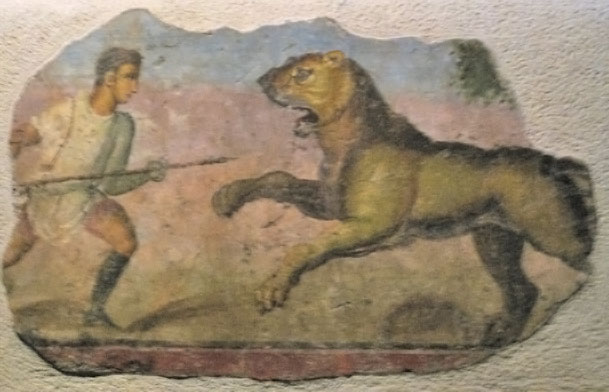
An example of the fight between humanity and the rest of the natural world-this one being literal.
How it Works
Is humanity part of the environment or are we separate from it? The belief that the natural environment is something to be used and conquered is core to this pattern. The way that people view nature is largely simplistic and based on moral and/or religious values. Many religions that teach that nature is separate from humanity and is there for the use of people lead people toward the viewpoint of being at odds with nature. These beliefs control how they interact with nature, to a large extent.
This sort of Humanity Vs. Nature situation has led to the degradation of the delicate balance of natural systems that cannot be easily replenished. With a growing population the need for natural resources are rising, but in 1st world countries the amount of resources a single person can consume significantly outweighs the amount of resources a person living in the third world would.


There may be multiple points of conflict in a single story, as characters may have more than one desire or may struggle against more than one opposing force.[3] When a conflict is resolved and the reader discovers which force or character succeeds, it creates a sense of closure.[4] Conflicts may resolve at any point in a story, particularly where more than one conflict exists, but stories do not always resolve every conflict. If a story ends without resolving the main or major conflict(s), it is said to have an "open" ending.[5] Open endings, which can serve to ask the reader to consider the conflict more personally, may not satisfy them, but obvious conflict resolution may also leave readers disappointed in the story.!!


Conflict in literature refers to the different drives of the characters or forces involved. Conflict may be internal or external—that is, it may occur within a character's mind or between a character and exterior forces, (or point(s) of view). Conflict is most visible between two or more characters, usually a protagonist and an antagonist/enemy/villain, but can occur in many different forms.  where the protagonist contends against a marlin.[14] It is also common in adventure stories, including Robinson Crusoe.[1] Man vs. Wild not only takes its name from this conflict, but it is also a great example, featuring Bear Grylls and his attempts to keep nature at bay.
With the very existence of a mankind on the face of this planet came the inherent struggle with the forces of the existing world around. They are the everyday struggles brought about by the natural surroundings that we have grown accustomed to. We live with these every day and have learned to overcome them on a somewhat regular basis without a trace of any thought that would remain with us over time. They are a part of our life that goes unnoticed, except when nature really challenges us, or tests us. In a time of crisis or danger when nature has us backed against the wall fighting for survival and the survival of others is when we must face the challenge. We must fight on with whatever circumstance is presented, no matter how small the problem may seem. Many times the battle will be won, and man will over come the challenge presented, and other times nature will get the better of even the best of us, showing its commanding power. Some of the best testaments to this never ending power struggle are the stories of men and women who know of the power of nature, or have experienced the power of nature first hand. Many American authors have written of this theme and its relevance in American society. They include works written by Robert Frost, Eudora Welty, and Stephen Crane. These authors present stories that dig deep into the power struggle between man and nature, often digging deep into the minds of the individual who is caught in the moment, fighting to survive, thinking thoughts that can only be thought in a time of extreme struggle and desperation. They either leave you with a sense of triumph, or a sense of tragedy and loss. They mirror the constant struggle between man and the forces of nature.
The short story "To Build a Fire" by Robert Frost is as good of an example as any of the extreme power of nature and the unforgiving cruelty it often displays to us. The main character in the story has to travel a ...
Description
As with other literary terms, these have come about gradually as descriptions of common narrative structures. Conflict was first described in ancient Greek literature as the agon, or central contest in tragedy.[3] According to Aristotle, in order to hold the interest, the hero must have a single conflict. The agon, or act of conflict, involves the protagonist (the "first fighter") and the antagonist (a more recent term), corresponding to the hero and villain. The outcome of the contest cannot be known in advance, and according to later critics such as Plutarch, the hero's struggle should be ennobling.

Even in modern non-dramatic literature, critics have observed that the agon is the central unit of the plot. The easier it is for the protagonist to triumph, the less value there is in the drama. In internal and external conflict alike, the antagonist must act upon the protagonist and must seem at first to overmatch him or her. For example, in William Faulkner's The Bear, nature might be the antagonist. Even though it is an abstraction, natural creatures and the scenery oppose and resist the protagonist. In the same story, the young boy's doubts about himself provide an internal conflict, and they seem to overwhelm him.
Similarly, when godlike characters enter (e.g. Superman), correspondingly great villains have to be created, or natural weaknesses have to be invented, to allow the narrative to have drama. Alternatively, scenarios could be devised in which the character's godlike powers are constrained by some sort of code, or their respective antagonist.
How it Works
Is humanity part of the environment or are we separate from it? The belief that the natural environment is something to be used and conquered is core to this pattern. The way that people view nature is largely simplistic and based on moral and/or religious values. Many religions that teach that nature is separate from humanity and is there for the use of people lead people toward the viewpoint of being at odds with nature. These beliefs control how they interact with nature, to a large extent.
This sort of Humanity Vs. Nature situation has led to the degradation of the delicate balance of natural systems that cannot be easily replenished. With a growing population the need for natural resources are rising, but in 1st world countries the amount of resources a single person can consume significantly outweighs the amount of resources a person living in the third world would.
There may be multiple points of conflict in a single story, as characters may have more than one desire or may struggle against more than one opposing force.[3] When a conflict is resolved and the reader discovers which force or character succeeds, it creates a sense of closure.[4] Conflicts may resolve at any point in a story, particularly where more than one conflict exists, but stories do not always resolve every conflict. If a story ends without resolving the main or major conflict(s), it is said to have an "open" ending.[5] Open endings, which can serve to ask the reader to consider the conflict more personally, may not satisfy them, but obvious conflict resolution may also leave readers disappointed in the story.!!
The basic types of conflict in fiction have been commonly codified as "man against man", "man against nature", and "man against self."[7] Although frequently cited, these three types of conflict are not universally accepted. Ayn Rand, for instance, argued that "man against nature" is not a conflict because nature has no free will and thus can make no choices.[8] Sometimes a fourth basic conflict is described, "man against society".[9][10] Some of the other types of conflict referenced include "man against machine" (The Terminator, Brave New World), "man against fate" (Slaughterhouse Five), "man against the supernatural" (The Shining) and "man against God" (A Canticle for Leibowitz)
Conflict in literature refers to the different drives of the characters or forces involved. Conflict may be internal or external—that is, it may occur within a character's mind or between a character and exterior forces, (or point(s) of view). Conflict is most visible between two or more characters, usually a protagonist and an antagonist/enemy/villain, but can occur in many different forms.
where the protagonist contends against a marlin.[14] It is also common in adventure stories, including Robinson Crusoe.[1] Man vs. Wild not only takes its name from this conflict, but it is also a great example, featuring Bear Grylls and his attempts to keep nature at bay.
With the very existence of a mankind on the face of this planet came the inherent struggle with the forces of the existing world around. They are the everyday struggles brought about by the natural surroundings that we have grown accustomed to. We live with these every day and have learned to overcome them on a somewhat regular basis without a trace of any thought that would remain with us over time. They are a part of our life that goes unnoticed, except when nature really challenges us, or tests us. In a time of crisis or danger when nature has us backed against the wall fighting for survival and the survival of others is when we must face the challenge. We must fight on with whatever circumstance is presented, no matter how small the problem may seem. Many times the battle will be won, and man will over come the challenge presented, and other times nature will get the better of even the best of us, showing its commanding power. Some of the best testaments to this never ending power struggle are the stories of men and women who know of the power of nature, or have experienced the power of nature first hand. Many American authors have written of this theme and its relevance in American society. They include works written by Robert Frost, Eudora Welty, and Stephen Crane. These authors present stories that dig deep into the power struggle between man and nature, often digging deep into the minds of the individual who is caught in the moment, fighting to survive, thinking thoughts that can only be thought in a time of extreme struggle and desperation. They either leave you with a sense of triumph, or a sense of tragedy and loss. They mirror the constant struggle between man and the forces of nature.
The short story "To Build a Fire" by Robert Frost is as good of an example as any of the extreme power of nature and the unforgiving cruelty it often displays to us. The main character in the story has to travel a ...
Description
As with other literary terms, these have come about gradually as descriptions of common narrative structures. Conflict was first described in ancient Greek literature as the agon, or central contest in tragedy.[3] According to Aristotle, in order to hold the interest, the hero must have a single conflict. The agon, or act of conflict, involves the protagonist (the "first fighter") and the antagonist (a more recent term), corresponding to the hero and villain. The outcome of the contest cannot be known in advance, and according to later critics such as Plutarch, the hero's struggle should be ennobling.
Even in modern non-dramatic literature, critics have observed that the agon is the central unit of the plot. The easier it is for the protagonist to triumph, the less value there is in the drama. In internal and external conflict alike, the antagonist must act upon the protagonist and must seem at first to overmatch him or her. For example, in William Faulkner's The Bear, nature might be the antagonist. Even though it is an abstraction, natural creatures and the scenery oppose and resist the protagonist. In the same story, the young boy's doubts about himself provide an internal conflict, and they seem to overwhelm him.
Similarly, when godlike characters enter (e.g. Superman), correspondingly great villains have to be created, or natural weaknesses have to be invented, to allow the narrative to have drama. Alternatively, scenarios could be devised in which the character's godlike powers are constrained by some sort of code, or their respective antagonist.




Nice
ReplyDeleteGood👍
ReplyDeleteNice
ReplyDeleteGood one 👏
ReplyDeleteGood work
ReplyDelete